




HU58® - Clinical Research Data Summary
HU58® Bacillus subtilis HU58 Spore-Forming Probiotic Strain
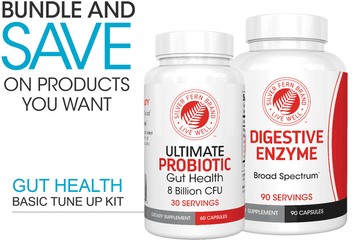
HU58® is a clinically studied ingredient used in the following Silver Fern™ Brand products:
- Ultimate Probiotic – https://www.silverfernbrand.com/products/ultimate-probiotic-supplement
- Kids Probiotic – https://www.silverfernbrand.com/products/childrens-probiotic-supplement
Introduction
HU58® is a high-potency, spore-based probiotic containing Bacillus subtilis HU58, a strain originally isolated from a healthy human gut. Unlike conventional probiotics, HU58 forms a highly resilient endospore that allows it to survive stomach acid, heat, dehydration, antibiotic exposure, and other harsh conditions, helping it reach the gut alive and active.*
Once in the gut, HU58 supports a balanced intestinal environment through competitive interactions within the microbiome, helping to maintain healthy microbial diversity without broadly disrupting beneficial bacteria. HU58 also supports digestive function by contributing to the breakdown of proteins, fats, and carbohydrates through enzyme production, and promotes gut health by supporting the production of short-chain fatty acids (SCFAs), which play a role in maintaining intestinal barrier function and normal immune activity.*
Emerging research suggests HU58 may also support normal nitrogen metabolism. In a placebo-controlled human study, supplementation was associated with reductions in circulating ammonia levels in individuals with elevated baseline levels.*
These are the studies for HU58®. Below, we provided a summary of each key data for each study, along with a link to the complete clinical and preclinical research.
- Summary of Study 1 – Full Study: https://pmc.ncbi.nlm.nih.gov/articles/PMC1428398/
- Summary of Study 2 – Full Study: https://pubmed.ncbi.nlm.nih.gov/18430003/
- Summary of Study 3 – Full Study: https://journals.indexcopernicus.com/api/file/viewByFileId/602370.pdf
- Summary of Study 4 – Full Study: https://biomedres.us/fulltexts/BJSTR.MS.ID.004839.php
- Summary of Study 5 – Full Study: https://pmc.ncbi.nlm.nih.gov/articles/PMC7345602/
- Summary of Study 6 – Full Study: Unpublished government report (UK Food Standards Agency, FSA Project Ref: G01022)
Ingredient Manufacturer Link: https://www.novonesis.com/en/biosolutions/food-and-beverages/functional-foods/gut-and-immunity/prosilience-hu58
Study 1 Summary
Complete Study Information: https://pmc.ncbi.nlm.nih.gov/articles/PMC1428398/
Intestinal Life Cycle of Bacillus subtilis
Tam, N.K.M. et al. Journal of Bacteriology. 2006.
This in vivo mechanistic study investigated whether Bacillus subtilis spores simply pass through the gastrointestinal tract or actively germinate, grow, and re-form spores within the gut, using a mouse intestinal model with supporting human fecal analysis, evaluating both laboratory strains and human-derived strains including HU58.
Study Design Highlights
- Study type: In vivo mouse model with supporting human fecal analysis
- Strains: Laboratory strain (B. subtilis PY79) and human-derived strains including HU58
- Methods: Oral spore administration, gene expression analysis of germination/sporulation, fecal persistence measurement, anaerobic growth assessment
Key Findings (What the Study Showed)
- Bacillus subtilis spores can germinate, transition into active (vegetative) cells, and re-form spores within the intestinal environment — demonstrating ongoing activity during GI transit, not just passive passage
- Human-derived strains (including HU58): Earlier germination, effective re-sporulation under gut-like conditions, and longer persistence vs. laboratory strains
- HU58-type spores detectable in fecal samples for extended periods, suggesting continued presence in the digestive tract
- Human-derived strains maintained function under low-oxygen conditions representative of the intestinal environment
Why This Study Matters
This study demonstrates that HU58 is not merely a transient organism — it actively germinates and remains viable within the gut environment. The superior persistence of human-derived strains like HU58 compared to laboratory strains helps explain its functional relevance as a spore-based probiotic.*
Reference Link: https://pmc.ncbi.nlm.nih.gov/articles/PMC1428398/
Study 2 Summary
Complete Study Information: https://pubmed.ncbi.nlm.nih.gov/18430003/
Interaction of Bacillus Spores with the Immune System
Huang, J-M. et al. FEMS Immunology & Medical Microbiology. 2008.
This mechanistic study evaluated how orally administered Bacillus spores interact with gut-associated immune tissues using a mouse model with supporting cell culture experiments, evaluating B. subtilis (including human-derived strains such as HU58), B. licheniformis, and B. flexus.
Key Findings (What the Study Showed)
- Oral Bacillus spore administration was associated with increased cellular activity within Peyer's patches, including immune cells involved in normal immune surveillance — occurring without tissue damage or abnormal enlargement, indicating a balanced physiological response
- Changes observed in signaling molecules associated with normal immune communication in both intestinal and peripheral tissues, indicating engagement with pathways involved in maintaining immune function
- Immune system interaction was linked to the transition of spores into their active (vegetative) form, supporting a dynamic spore-host physiological relationship
Why This Study Matters
This study demonstrates that Bacillus spores — including HU58-type strains — can interact with components of the gut-associated immune system and participate in normal immune signaling processes, explaining how spore-based probiotics support normal immune function at the gut level.*
Reference Link: https://pubmed.ncbi.nlm.nih.gov/18430003/
Study 3 Summary
Complete Study Information: https://journals.indexcopernicus.com/api/file/viewByFileId/602370.pdf
Effects of Bacillus subtilis HU58 on Immune Markers in Healthy Adults
Dound, Y.A. et al. The Indian Practitioner. 2017. Vol. 70, No. 9.
This open-label, single-arm human study evaluated B. subtilis HU58 at 2 billion CFU once daily in 18 healthy adults (9 male, 9 female) over 8 weeks, assessing immune activity biomarkers, NK cell counts, comprehensive blood panel safety markers, inflammatory markers (CRP), and adverse events.
Study Design Highlights
- Study design: Open-label, single-arm
- Participants: 18 healthy adults (9 male, 9 female)
- Dose: B. subtilis HU58 2 billion CFU once daily
- Duration: 8 weeks
- Outcomes: IL-6, TNF-α, NK cell counts, CBC, metabolic markers, liver/kidney function, CRP
Key Findings (What the Study Showed)
- Statistically significant changes in biomarkers associated with immune signaling (IL-6 and TNF-α) after 8 weeks — suggesting influence on pathways involved in normal immune function
- NK cell counts and other measured immune markers remained within normal reference ranges — no evidence of abnormal immune suppression or overstimulation
- No serious adverse events; clinical safety markers (liver, kidney, metabolic, hematologic) within normal ranges throughout; participants reported general improvements in digestive comfort
Benefits of HU58® Demonstrated by This Study
Based directly on the human study findings, HU58® was shown to:
✓ Support changes in immune signaling biomarkers (IL-6, TNF-α) consistent with normal immune activity
✓ Maintain NK cell counts within normal reference ranges
✓ Be well tolerated over 8 weeks with no serious adverse events
✓ Be associated with participant-reported improvements in digestive comfort
Why This Study Matters
This study provides the primary human immune data for HU58®, demonstrating changes in immune-related biomarkers alongside strong tolerability in healthy adults — supporting its role as a probiotic that contributes to normal immune function and digestive health.*
Reference Link: https://journals.indexcopernicus.com/api/file/viewByFileId/602370.pdf
Study 4 Summary
Complete Study Information: https://biomedres.us/fulltexts/BJSTR.MS.ID.004839.php
Effects of Bacillus subtilis HU58 on Stool Characteristics During Antibiotic Use
Mehta, D.S. et al. The Indian Practitioner. 2020. Vol. 73, No. 4.
This open-label, placebo-controlled human study evaluated B. subtilis HU58 (2 × 10⁹ CFU once daily) vs. placebo in 60 adults (ages 18–65) receiving oral antibiotics and experiencing changes in bowel habits over 7 days of supplementation with follow-up through day 15, assessing stool consistency (Bristol Stool Chart), stool frequency, and clinical safety markers.
Study Design Highlights
- Study design: Open-label, placebo-controlled
- Participants: 60 adults (ages 18–65) on oral antibiotics with bowel changes
- Dose: HU58 2 × 10⁹ CFU once daily vs. placebo
- Duration: 7 days + follow-up through day 15
Key Findings (What the Study Showed)
- HU58 group: Shift toward more normal stool consistency by day 7, maintained through follow-up; placebo showed minimal change
- HU58 group demonstrated greater support for normal bowel patterns compared to placebo, with many participants returning to typical bowel patterns during the study
- No serious adverse events; clinical safety markers within normal ranges; well tolerated with high compliance
Benefits of HU58® Demonstrated by This Study
Based directly on the clinical outcomes, HU58® was shown to:
✓ Support more normal stool consistency during antibiotic use vs. placebo
✓ Support a return to normal bowel patterns during antibiotic therapy
✓ Maintain improvements through a 15-day follow-up period
✓ Be well tolerated with high compliance and no serious adverse events
Why This Study Matters
Antibiotic use can disrupt gut microbial balance and affect normal digestion. This study provides human evidence that HU58® can help support digestive comfort and maintain normal bowel function during these periods — and its spore-forming structure allows it to remain stable even during antibiotic exposure, making it a practical option for microbiome support when resilience is especially important.*
Reference Link: https://biomedres.us/fulltexts/BJSTR.MS.ID.004839.php
Study 5 Summary
Complete Study Information: https://pmc.ncbi.nlm.nih.gov/articles/PMC7345602/
Safety and Metabolic Marker Observations with Bacillus subtilis HU58
Yossef, S. et al. Evidence-Based Complementary and Alternative Medicine. 2020.
This double-blind, placebo-controlled pilot study evaluated B. subtilis HU58 (5 billion CFU/day for Days 1–5; 10 billion CFU/day for Days 6–28) vs. placebo in 40 adults receiving standard medical therapy over 4 weeks, assessing safety and tolerability as the primary objective and blood ammonia levels as a secondary outcome.
Study Design Highlights
- Study design: Double-blind, placebo-controlled pilot
- Participants: 40 adults receiving standard medical therapy
- Dose: 5 billion CFU/day (Days 1–5) → 10 billion CFU/day (Days 6–28) vs. placebo
- Duration: 4 weeks
- Primary objective: Safety and tolerability; Secondary: Blood ammonia levels
Key Findings (What the Study Showed)
- No severe treatment-emergent adverse events; overall adverse event incidence low and comparable between groups
- Clinical safety markers (liver, kidney, hematologic) remained within normal ranges throughout
- HU58 was well tolerated over 4 weeks alongside standard care
- Subgroup analysis: Participants with higher baseline ammonia levels experienced reductions over the study course — suggesting a potential influence on pathways involved in normal nitrogen metabolism (overall group differences were not statistically significant)
Benefits of HU58® Demonstrated by This Study
Based directly on the pilot study findings, HU58® was shown to:
✓ Demonstrate a favorable safety profile at up to 10 billion CFU/day alongside standard care
✓ Maintain normal clinical safety markers over 4 weeks
✓ Show subgroup observations supporting normal nitrogen metabolism in individuals with elevated baseline ammonia levels
✓ Be well tolerated in a medically supervised population
Why This Study Matters
This controlled pilot study provides safety data for HU58® in a medically supervised population and offers early insight into how spore-based probiotics may support normal metabolic processes linked to gut-derived compounds — reinforcing its potential role in overall gut and metabolic health.*
Reference Link: https://pmc.ncbi.nlm.nih.gov/articles/PMC7345602/
Study 6 Summary
Complete Study Information: Unpublished government report — UK Food Standards Agency (FSA Project Ref: G01022)
Evaluation of Probiotic Survivability Under Simulated Gastrointestinal Conditions
Gibson, G.R. et al. UK Food Standards Agency.
This independent, government-commissioned in vitro study evaluated the survivability of 35 probiotic strains from 12 commercial products across a multi-stage gastrointestinal simulation including simulated gastric conditions (low pH with digestive enzymes), upper intestinal conditions (bile salts and pancreatic enzymes), and a three-stage colon model (proximal, transverse, distal regions). Strains included Lactobacillus, Bifidobacterium, Enterococcus, Lactococcus, and Bacillus species.
Key Findings Related to Bacillus Probiotics
- Spore-forming Bacillus strains demonstrated high stability under conditions designed to mimic stomach acid, bile salts, and digestive enzymes — reflecting their structural resilience as spore-forming organisms
- The upper intestine was identified as a challenging environment for many probiotic strains; Bacillus spores maintained viability under these conditions
- In simulated colon models, Bacillus strains demonstrated the ability to remain present over time — indicating potential for continued activity in the gut environment compared to some non-spore-forming strains
- Probiotic survivability varies considerably depending on strain type and formulation
Why This Study Matters
This independent government-commissioned evaluation provides comparative survivability evidence, illustrating how spore-based probiotics like HU58® are designed to withstand digestive stress and remain viable through the full digestive journey — a key practical advantage over many conventional probiotic strains.*
Reference Link: Unpublished report — UK Food Standards Agency (FSA Project Ref: G01022)
Big-Picture Integration with Other Studies
- Study 1: Mechanistic model study demonstrating HU58-type B. subtilis germinates and persists in the gut environment — with human-derived strains showing superior persistence vs. laboratory strains.
- Study 2: Mouse model study showing Bacillus spores (including HU58-type) interact with Peyer's patches and normal immune signaling pathways following oral administration — in a balanced, non-inflammatory manner.
- Study 3: Open-label human study in 18 healthy adults showing changes in IL-6 and TNF-α immune biomarkers at 2 billion CFU/day for 8 weeks with strong tolerability and participant-reported digestive comfort improvements.
- Study 4: Open-label, placebo-controlled human study in 60 adults showing HU58® supports stool consistency and normal bowel patterns during antibiotic use vs. placebo, with high compliance and no serious adverse events.
- Study 5: Double-blind, placebo-controlled pilot in 40 adults showing favorable safety at up to 10 billion CFU/day alongside standard care, with subgroup observations in ammonia-related metabolic markers.
- Study 6: UK government-commissioned in vitro survivability study confirming spore-forming Bacillus strains maintain viability through simulated gastric, intestinal, and colon conditions — outperforming many non-spore-forming probiotic strains.
HU58® Ingredient Summary & Real-World Relevance
HU58® represents a different approach to gut support. Unlike non-spore-forming bacteria that may be sensitive to stomach acid, bile, and environmental stressors, Bacillus subtilis HU58 forms a highly resilient endospore originally isolated from a healthy human gut — allowing it to survive digestive conditions, reach the gut, and remain active within the intestinal environment.*
Research across human, preclinical, and mechanistic studies shows that HU58® supports microbiome balance, contributes to normal digestive function, and plays a role in maintaining healthy immune activity. It has also been shown to support normal bowel patterns during antibiotic use and to demonstrate safety at doses up to 10 billion CFU/day alongside standard care.*
Rather than simply adding organisms to the gut, HU58® works within the existing microbiome, supporting a balanced intestinal environment through natural microbial interactions and enzymatic activity. It is shelf-stable, antibiotic-compatible, and well tolerated — making it a reliable option for daily use, including during times when digestive balance may be challenged.*
Ingredient Manufacturer Link: https://www.novonesis.com/en/biosolutions/food-and-beverages/functional-foods/gut-and-immunity/prosilience-hu58
HU58® is a clinically studied ingredient used in the following Silver Fern™ Brand products:
*These statements have not been evaluated by the Food and Drug Administration. This product is not intended to diagnose, treat, cure, or prevent any disease.